
Basics: Understanding the creator economy
Once you understand how this economy actually works, you stop guessing and start building something scalable.

Over the last couple decades, building a career or a business meant choosing one of three paths:
Start a company
Work for one
Or rely on large media institutions to reach people at scale
Opportunity, distribution, and influence were mostly controlled by businesses, publishers, TV networks, and major brands. Individuals could create, but it was much harder to build an audience, or a business, without someone else controlling it.
There was no real path for an individual creator to build an audience and get paid directly for their content. If you wanted to make an impact, you had to do it through someone else’s platform.
The creator economy is the phrase for the new world that flipped that model on its head.
How the Creator Economy Started
For decades, attention was controlled by traditional advertising. Brands relied on TV commercials, radio, print media, and billboards to reach consumers, with global ad spending largely dominated by large companies and media networks throughout the 1980s, 1990s, and early 2000s.
…Then came social media
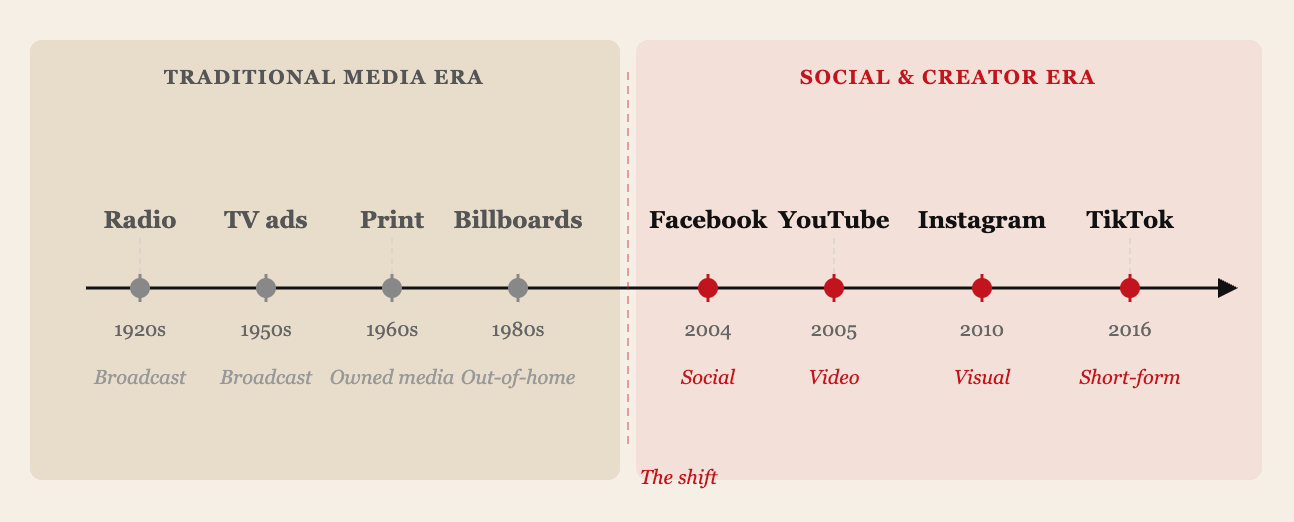
Platforms like YouTube (2005), Facebook (2004), Instagram (2010), and later TikTok (2016) completely changed how people discovered content online. Suddenly, individuals could build audiences without needing massive budgets or traditional media exposure.
By the 2010s, this had given rise to the influencer economy: creators building loyal, engaged audiences and brands paying them directly for access to those audiences.
But the creator economy took it a step further.
The creator economy is the shift toward individuals building audiences online and turning their content, knowledge, creativity, and personal brands into businesses. What started with creators promoting products for brands evolved into people building entire businesses around their own audiences, generating income through sponsorships, subscriptions, digital products, courses, memberships, affiliate marketing, consulting, live events, and more.
The creator economy has grown into one of the fastest-moving sectors in the global economy.
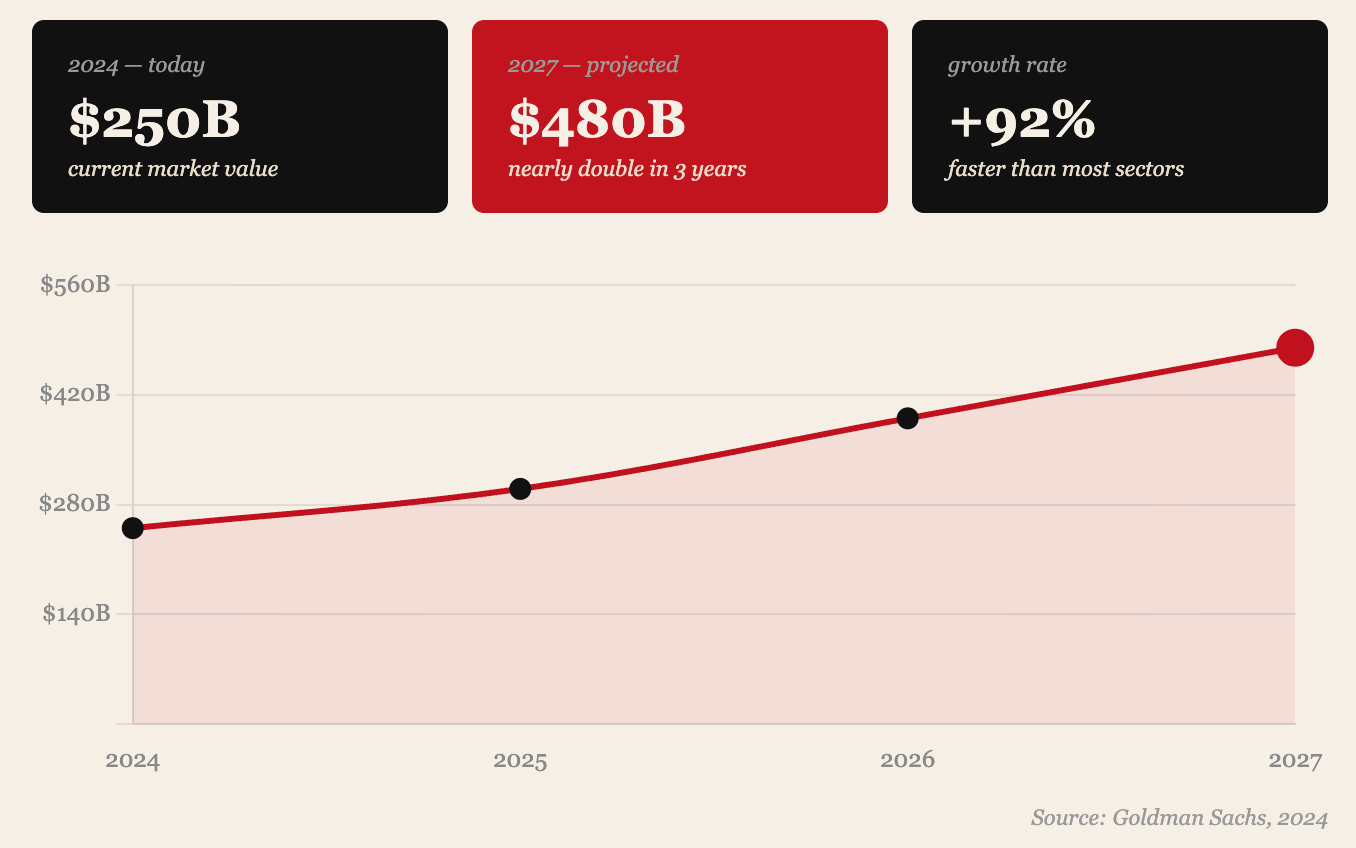
And it’s not just the market size that tells the story, it’s the behaviour change behind it:
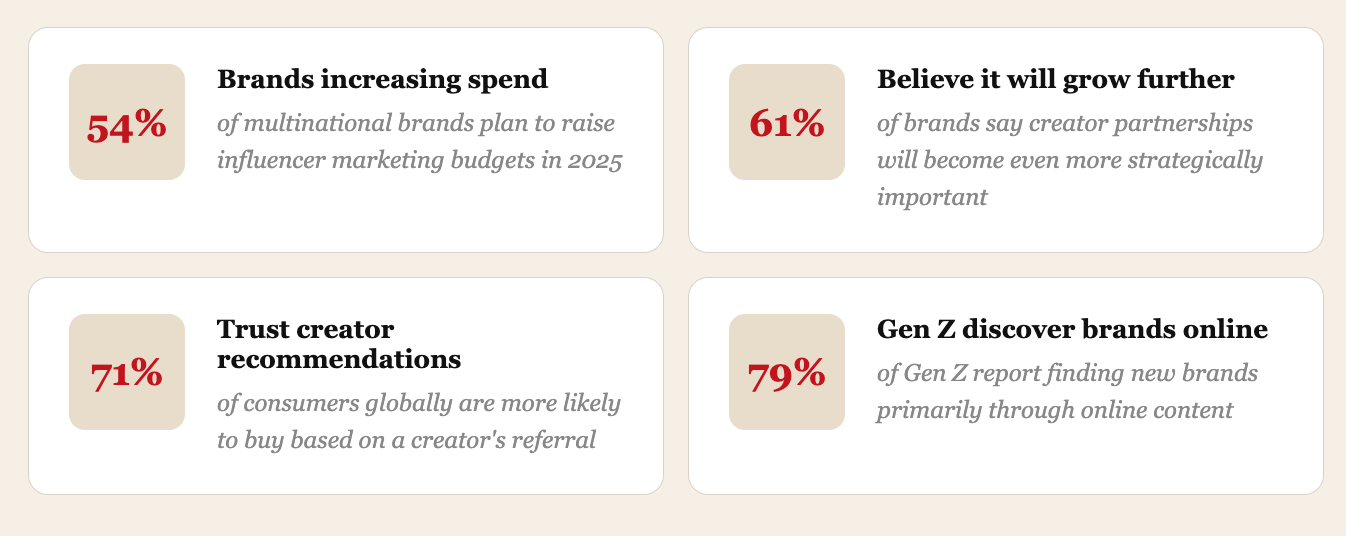
Instead of businesses pouring their marketing budgets into traditional ads, they’re investing in creators because people trust creators more than they trust ads.
Why this matters and why it’s not going away
The creator economy is not a passing trend or a social media fad. It represents a structural shift in how attention, influence, and income flow in the digital age.
The forces driving it aren’t reversible:
Audiences now expect to hear from people, not corporations
Distribution is no longer gatekept, meaning anyone with a phone and something to say can reach the world
Trust in traditional institutions and advertising has declined while trust in individual creators has grown
The tools to build, monetise, and scale a creator business have never been more accessible
Creators who learn to earn trust, sustain attention, and convert influence into revenue are building brands, businesses, and communities with genuine longevity.
Once you understand how this economy actually works, you stop guessing and start building something scalable.
Success in this space requires more than consistent posting. Platforms are engineered to reward attention. Brands depend on creators to access audiences they can no longer reach through traditional channels. Audiences gravitate toward authenticity over polish. And revenue now flows from more sources than ever from UGC and affiliate partnerships to digital products, memberships, and beyond.
What’s next: How I built my brand, and how you can too.
In my next article, I break down the exact strategies that worked for me, with practical examples you can apply to any niche or industry, whether you’re starting from zero or looking to scale what you’ve already built.